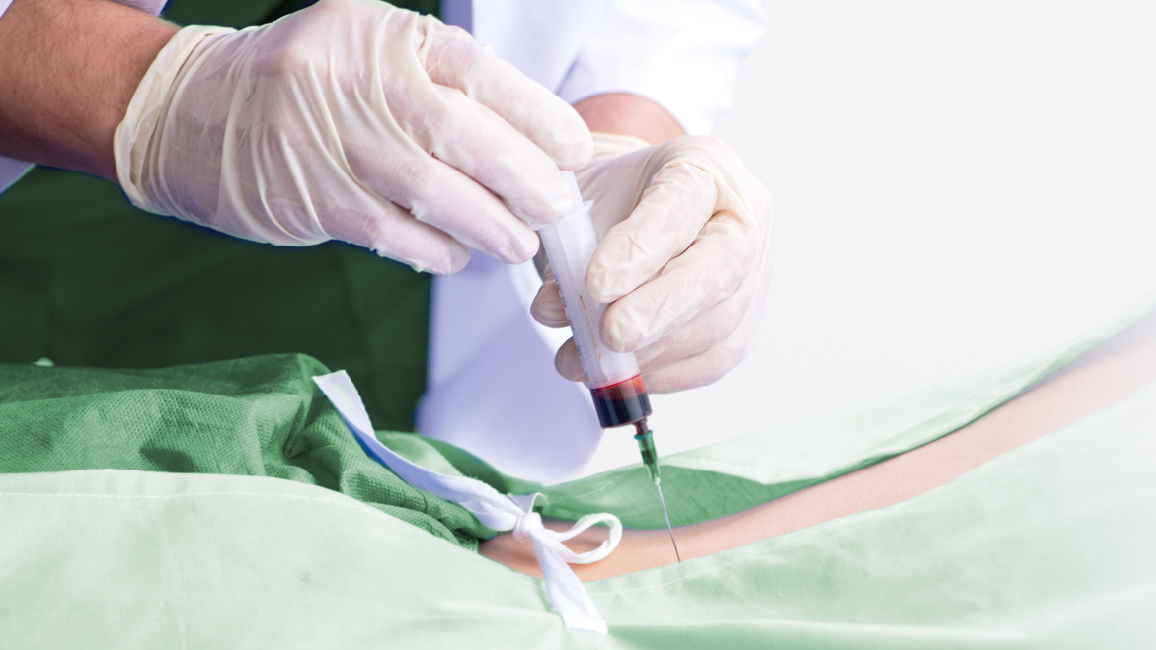
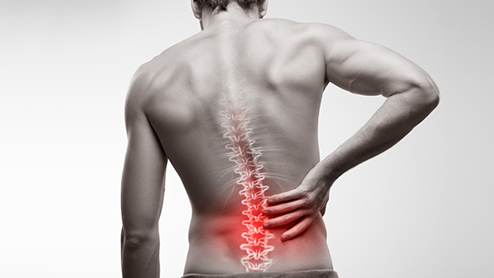
TLIF Surgery by O-arm: Precise, Less Pain, and Quick Recovery
Center : Spine Center
Article by : Dr. Teerachat Tanasansomboon28 April 2022
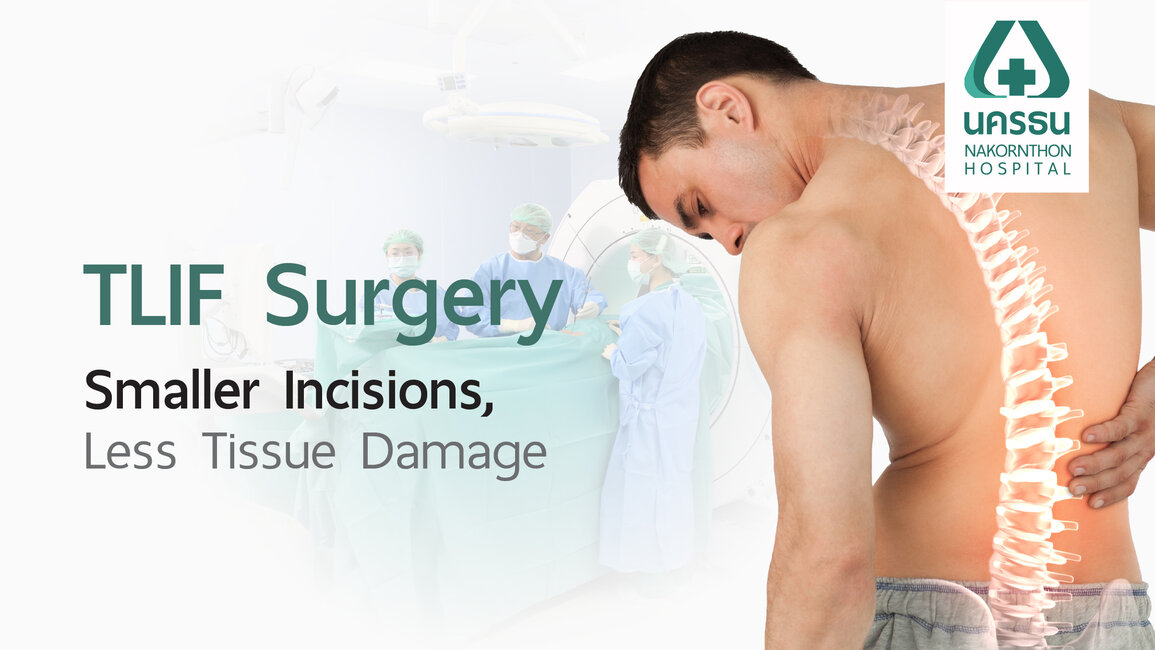
Today, spinal fusion surgery has evolved with the use of Transforaminal Lumbar Interbody Fusion (TLIF) with O-arm Navigation, a minimally invasive technique that replaces traditional open surgery. Unlike conventional methods, which require a large midline incision and significant muscle dissection to access the spine, TLIF allows for smaller incisions and avoids extensive muscle damage.
This modern procedure minimizes trauma by eliminating the need to detach muscle from the spine, significantly reducing postoperative pain and accelerating recovery. With the integration of O-arm Navigation, surgeons can perform the operation with greater precision and safety. Only four small incisions are needed, and the enhanced visualization ensures accurate screw placement while minimizing tissue damage, leading to better outcomes for patients.
Table of Contents
- What is Spondylolisthesis?
- What is TLIF Surgery?
- What conditions does TLIF surgery treat?
- How is TLIF surgery performed?
- TLIF with O-arm Navigation Benefits
- TLIF surgery procedure
- Post-TLIF Surgery Care Instructions
- Risks and Complication TLIF
- TLIF Surgery at Nakornthon Hospital
- Free Online Consultation with a Specialist
What is Spondylolisthesis?
Spondylolisthesis is a condition where one of the vertebrae in the spine slips out of its normal position—either forward or backward. It most commonly occurs at the L4-L5 level of the lumbar spine, as this area bears much of the body's weight.
The severity of symptoms can vary depending on the degree of slippage. Most patients experience lower back pain, which tends to worsen after physical activities, especially those involving lumbar movement. In addition to back pain, symptoms are generally categorized into two main types:
- Back-related symptoms: Persistent lower back pain that intensifies with certain movements such as bending, extending, or walking.
- Leg-related symptoms: Pain, numbness, or a feeling of heaviness in the hips or legs, especially during walking. These symptoms often improve when the patient leans forward or sits down. In more severe cases—especially when spinal stenosis is present—patients may experience difficulty with bladder or bowel control, and walking distances may become increasingly limited.
Other conditions such as sciatica, which involves pain radiating down the legs, and scoliosis, a lateral curvature of the spine, can also exacerbate the symptoms of spondylolisthesis and may require similar treatments, such as TLIF, to stabilize the spine and alleviate pain.
One of the effective treatment options for this condition is Transforaminal Lumbar Interbody Fusion (TLIF), a minimally invasive spinal fusion surgery. TLIF helps stabilize the spine, alleviate chronic back pain, and restore normal movement, allowing patients to return to daily activities with improved quality of life.
What is TLIF Surgery?
Transforaminal Lumbar Interbody Fusion (TLIF) is a surgical technique used to treat lower back pain caused by degenerative disc disease or spinal instability such as spondylolisthesis. The procedure involves removing the damaged or degenerated disc and replacing it with an artificial spacer or interbody cage to restore proper spacing between the vertebrae. Screws and rods are then inserted to stabilize the affected spinal segment and return it to its correct alignment.
TLIF spine surgery is a minimally invasive spinal fusion technique, performed through small skin incisions. Surgeons utilize advanced imaging guidance, such as O-arm Navigation, which provides real-time 3D imaging during the procedure. This technology significantly enhances the accuracy of screw placement—up to 99%—and ensures a safer and more precise surgery.
With this modern approach, patients experience less postoperative pain, minimal tissue disruption, and a quicker return to normal daily activities compared to traditional open surgery.
What conditions does TLIF surgery treat?
Transforaminal Lumbar Interbody Fusion (TLIF) is commonly used to treat chronic back pain caused by spinal instability, disc degeneration, or vertebral misalignment. These conditions may lead to narrowing of the spinal canal (spinal stenosis), which compresses the nerves and results in persistent pain or neurological symptoms. TLIF and MIS TLIF techniques, including spine TLIF procedures, are especially beneficial in cases where non-surgical treatments have not provided relief.
TLIF surgery is typically used to treat:
- Chronic lower back pain lasting more than 3 months, especially when associated with spinal instability or disc collapse
- Back pain radiating to the hips and down the legs, indicating nerve compression
- Neurological symptoms related to vertebral misalignment, such as muscle weakness or issues with bladder and bowel control
By stabilizing the affected spinal segments and relieving nerve pressure, TLIF can help restore function and improve the patient’s quality of life.
How is TLIF surgery performed?
Transforaminal Lumbar Interbody Fusion (TLIF) is a surgical technique used to treat spinal instability, particularly in patients with spondylolisthesis, who have not responded to conservative treatments such as medication, physical therapy, or spinal injections. This procedure is often recommended for individuals experiencing persistent or severe lower back pain, as well as those with neurological symptoms such as leg weakness or impaired bladder and bowel function. Patients diagnosed with grade 3 or 4 spondylolisthesis may also be suitable candidates for surgery.
TLIF involves fusing two or more vertebrae in the lumbar spine to stabilize the affected area. The goal is to relieve nerve compression, reduce pain caused by vertebral misalignment, and restore the spine to as close to its natural alignment as possible. MIS TLIF surgery has become increasingly popular due to its less invasive nature compared to traditional open TLIF approaches.
Using a MIS TLIF procedure, surgeons access the spine through small skin incisions and utilize advanced technology such as O-arm Navigation, which provides real-time 3D imaging for enhanced precision and safety during surgery.
This modern surgical method offers several advantages, including reduced tissue damage, less postoperative pain, and a faster recovery—allowing patients to return to their daily lives more quickly.

TLIF with O-arm Navigation Benefits
O-arm Navigation significantly enhances the precision and safety of TLIF (Transforaminal Lumbar Interbody Fusion) procedures. This advanced imaging technology provides high-resolution 3D views of the spine—from the top, bottom, and sides—allowing surgeons to plan screw placement with exceptional accuracy. With real-time guidance, surgeons can insert screws and spinal implants precisely in the intended position, minimizing the risk of nerve damage and improving surgical outcomes.
When used in conjunction with the MIS TLIF technique, O-arm Navigation further boosts the benefits of minimally invasive surgery. With up to 99% accuracy in instrument placement, O-arm Navigation helps avoid complications from misaligned screws and reduces the risk of injury to surrounding nerves. It is a key tool in ensuring safer, more effective spinal fusion surgery.
At the Spine Center of Nakornthon Hospital, experienced spine surgeons specialize in minimally invasive TLIF procedures and are highly skilled in using O-arm Navigation to optimize surgical success.
Key Benefits of TLIF Surgery with O-arm Navigation:
- Smaller incisions and significantly less postoperative pain
- Shorter hospital stays
- High accuracy (up to 99%) in screw placement with minimal risk to nearby nerves
- Low risk of needing a blood transfusion
Early mobility—patients can typically begin walking within 24 hours after surgery
TLIF surgery procedure

Transforaminal Lumbar Interbody Fusion (TLIF) surgery, combined with O-arm Navigation, is a modern approach to treating spondylolisthesis. The procedure is minimally invasive, designed to stabilize the spine, alleviate pain, and restore proper alignment. The TLIF procedure steps involve the following:
Pre-TLIF surgery procedures
Transforaminal Lumbar Interbody Fusion (TLIF) is considered a major surgery, and patients will be administered general anesthesia before the procedure begins. Therefore, a thorough preoperative health check is essential to ensure the body is well-prepared for surgery.
Before the surgery, patients will undergo a comprehensive physical examination, including an MRI scan and a general health check-up.
It is crucial for patients to inform their doctor of any medical history, allergies, or ongoing treatments. Specifically, if patients are using blood-thinning medications or anticoagulants, such as aspirin or warfarin, they must discontinue these medications at least one week prior to surgery to minimize the risk of bleeding complications during the procedure.
During TLIF surgery procedures
Transforaminal Lumbar Interbody Fusion (TLIF) surgery, combined with O-arm Navigation, begins with the surgeon making a small incision of about 1 inch on the back. This minimally invasive approach allows the surgeon to relieve nerve compression, which could be caused by conditions such as a herniated disc or spondylosis, using a tubular retractor. The surgeon views the surgical site through a microscope that provides enhanced magnification for better visualization.
The surgeon can clearly see the targeted areas, including the vertebrae, intervertebral disc, and surrounding nerves. Once the nerve compression is relieved, a device containing a portion of the patient’s own bone is inserted to facilitate future spinal fusion.
After this, O-arm Navigation is utilized to create a 3D image of the spine. This advanced imaging tool helps to precisely position screws and spinal rods. The surgeon then places screws through the small incision to stabilize the spine and ensure the desired alignment.
The entire surgery typically takes about 2 to 3 hours, and the use of O-arm Navigation ensures high precision and safety during the procedure.
Post-TLIF Surgery Care Instructions
After undergoing Transforaminal Lumbar Interbody Fusion (TLIF) surgery, patients should follow these guidelines for optimal recovery:
- Avoid bending or heavy lifting: It is crucial to refrain from activities that involve bending the back or lifting heavy objects. Ideally, this should be avoided for life. The screws placed during the surgery will fuse with the vertebrae over approximately 6 months. During this time, the patient should take care not to move the fused vertebrae.
- Physical therapy is not mandatory, but regular exercise is recommended to strengthen the muscles surrounding the spine. Strong spinal muscles help stabilize the spine, making it less susceptible to injury. Nakornthon Hospital's doctors and physical therapists will guide patients on proper exercises to improve strength and promote healing.
By following these precautions, patients can ensure a smoother recovery and reduce the risk of complications post-surgery.
Risks and Complication TLIF
As with any surgical procedure, Transforaminal Lumbar Interbody Fusion (TLIF) carries certain risks, including:
- Nerve damage, which may result in weakness or abnormal urinary function, and potential nerve rupture
- Post-surgery bleeding
- Cerebrospinal fluid leakage
- Wound infections
- Exposure to radiation during the procedure
- Complications related to screw fixation, such as improper positioning, screw or rod fractures, or issues with the implanted bone graft
- Deep vein thrombosis (DVT), which may lead to a pulmonary embolism if the clot moves to the lungs
- In rare cases, side effects may arise within 1 year following surgery
However, these complications are uncommon, and many patients experience a smooth recovery without these issues.
TLIF Surgery at Nakornthon Hospital
At Nakornthon Hospital, we take great pride in being a leading center for spinal care, offering specialized treatment for various spine-related conditions. Our team of expert spinal surgeons is supported by cutting-edge technology, enhancing the effectiveness and precision of every procedure. For Transforaminal Lumbar Interbody Fusion (TLIF) surgeries, we utilize state-of-the-art surgical tools, ensuring the highest level of safety and precision during the procedure.
We understand that international patients residing in Thailand seek fast recovery and minimal hospital stay. Our hospital is equipped with the latest medical technology and facilities, designed to support quick and efficient recovery. The TLIF procedure at Nakornthon Hospital is performed with careful planning and a collaborative approach, where our medical team consults with specialists to determine the most appropriate treatment for each patient.
At Nakornthon Hospital, we prioritize the health and well-being of our patients. Our goal is for every patient who walks through our doors, experiencing back pain or discomfort, to leave with improved health, a stronger body, and a smile on their face. You can trust that our commitment to effective, minimally invasive procedures, such as TLIF, will help you return to your normal life with minimal downtime.
For more information, please contact:
- - Website : /en
- - Facebook : Nakornthon Hospital - International Patient
- - Line : @nakornthoninter
- - Tel: 02-450-9999 (Available 24 hours)

Free Online Consultation
Medical Team Spine Center